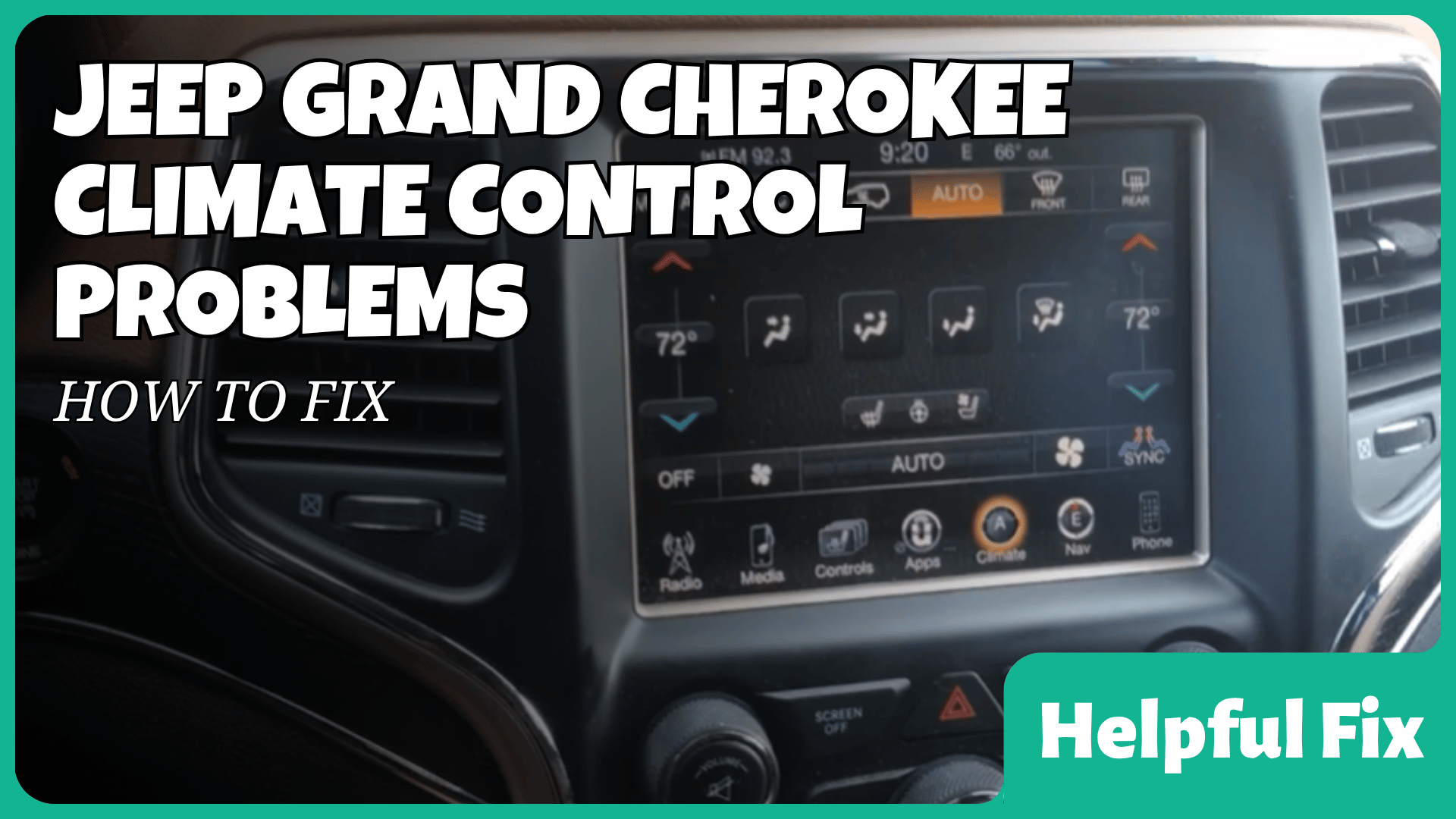
Jeep Grand Cherokee Climate Control Problems (Troubleshooting Guide)
Jeep Grand Cherokee climate control problems cause fight-or-flight moments in hot sun and freezing mornings. This guide identifies the most common failures, explains how to diagnose each quickly, and gives clear step-by-step repair or temporary workaround options. Use the diagnostic checklist, symptom table, and targeted repair sections to find the exact root cause and fix it with confidence.
Quick summary
- Check basic settings and fuses first. Confirm AC is on, mode is correct, and fuses for HVAC are intact.
- Inspect airflow. Replace the cabin air filter and clear vents before deeper diagnostics.
- If the AC does not cool, test refrigerant pressure. Low refrigerant is the most common reason for poor cooling; find and repair leaks before recharging.
- Unequal cabin temperatures usually point to a blend door or blend door actuator failure. These are common on Grand Cherokees and often require actuator replacement.
- Electrical and software faults can disable climate controls. Infotainment and network issues have been reported that affect HVAC operation. Check for software updates and battery/alternator health.
- Listen and feel. Blower motor noise, clicking behind the dash, and different temperatures left vs right narrow diagnosis quickly.
Symptom-to-cause table
| Symptom | Most likely causes | Quick fixes / next steps |
|---|---|---|
| AC runs but no cold air | Low refrigerant, compressor failure, clogged expansion valve | Check system pressure, inspect for leaks, test compressor engagement, recharge only after repairing leaks |
| Driver side cold, passenger side warm | Blend door actuator or blend door gear broken | Listen for clicking, access actuator under dash, replace actuator/gear. See actuator replacement guides here |
| Weak airflow | Dirty cabin filter, blocked vents, failing blower motor | Replace cabin filter, clear vents, test blower across speeds |
| Controls unresponsive, system reboots | Uconnect/cluster software bug, electrical fault, low battery voltage | Check battery and alternator, look for software updates, scan for communication errors |
| Clicking or grinding from dash | Broken actuator gear, debris in door gears | Remove lower dash panels, inspect and replace faulty actuators |
Step-by-step diagnostic checklist
- 1. Verify HVAC settings. Set system to MAX A/C, recirculate off and on, blower to high, and confirm vents are set to face/face+floor.
- 2. Check basic electricals. Inspect HVAC fuses in the interior and engine fuse boxes. Replace blown fuses and retest.
- 3. Confirm airflow. Put hand at each vent at full blower. If weak at all vents, check cabin air filter and blower motor operation. Replace filter if dirty.
- 4. Listen for noises. With the car running and fan on, listen under the dash for repeated clicking or grinding indicating a bad blend door actuator.
- 5. Test compressor operation. With AC on and engine at idle, observe the front AC compressor clutch. If clutch does not engage but there is voltage, suspect a compressor or thermal/pressure safety device.
- 6. Check refrigerant charge. Use manifold gauges or a professional shop to read high and low side pressures. Low pressure most often means a leak plus low refrigerant. Do not recharge without leak repair.
- 7. Scan for codes. Use an OBD2 scanner that reads HVAC module codes and Uconnect codes. Look for HVAC blend door actuator codes and network communication faults.
- 8. Inspect HVAC actuators and doors. Remove lower dash panels to access actuator motors. Manually move doors if possible to check for binding or broken gear teeth.
- 9. Check heater core and coolant. If the heater blows cold when set to heat, verify engine temperature, coolant level, and heater core flow.
Low refrigerant and leaks
How it fails
Low refrigerant causes warm A/C output, intermittent compressor engagement, and poor dehumidification. Most systems lose charge over time. Leaks occur at hose connections, the condenser, or o-ring seals.
How to check
- Attach A/C manifold gauges to measure high and low side pressures while running; compare to expected values for ambient temperature.
- Look for oily residues around hoses, fittings, and the condenser. Use a UV dye kit and UV lamp to find small leaks.
How to fix
- Repair or replace leaking component. Replace O-rings, hoses, or condenser as needed.
- Evacuate the system and perform a vacuum test to confirm leak-free operation.
- Recharge with correct refrigerant type and oil volume. Use the factory-specified charge weight where available.
- Verify compressor cycles and temperature drop across the evaporator.
Do not recharge a leaking system. Recharging without repairing the leak covers up the cause and can damage the compressor.
Blend door and actuator failures
Symptoms and cause
When the driver and passenger cabins read different temperatures or the temperature knob has no effect, a blend door actuator is the likely culprit. Actuator gears wear and break, leaving the door stuck in one position. This is a well-documented problem on Grand Cherokee models. For a visual guide to actuator replacement, see this repair walk-through.
Diagnosis
- Turn climate controls and listen for repeated clicking under the dash. Clicking usually indicates stripped gears inside the actuator.
- Access the actuator and rotate the shaft by hand to check for free movement of the blend door.
- Scan the HVAC module for actuator position codes.
Repair steps
- Disconnect the battery before working under the dash to avoid electrical shorts.
- Remove lower dash panels to access the actuator(s). Document connector locations.
- Remove the actuator screws, unplug the connector, and replace the actuator with an OEM or high-quality aftermarket unit.
- Reprogram or calibrate the HVAC actuators if required by the vehicle procedure. Some models perform an automatic relearn on start.
Replacement time varies. Simple actuator swaps can take 30 to 90 minutes per actuator. Severe cases with multiple failed actuators will take longer.
Airflow problems: cabin filter, blower motor, vents
Cabin filter and vents
A clogged cabin filter reduces airflow dramatically. Replace the cabin filter at recommended intervals or sooner if you drive in dusty areas. Check for obstructions in the dash vent ducts and glovebox area.
Blower motor and resistor
If the fan only runs at certain speeds or not at all, suspect the blower motor, blower resistor, or related relay. Test blower motor by applying direct 12V power. Replace resistor if the motor works only on high speed.
Electrical, software, and module errors
Symptoms
Unresponsive climate controls, the HVAC display freezing, or system reboots can come from the infotainment module or vehicle network problems. Several owners have reported Uconnect and electrical anomalies that affect HVAC operation. Here are some known electronic issues according to Lemon Firm.
Troubleshoot
- Check battery voltage and alternator output. Low system voltage causes modules to behave erratically.
- Use a scanner to read module faults including body control module, HVAC module, and Uconnect.
- Search for TSBs or software updates for the model year. Dealers can apply firmware updates that fix HVAC communication faults.
Fix
Replace faulty modules only after confirming wiring, fuses, and grounds. In many cases a software reflash or module reset resolves the issue. If the infotainment system is freezing and affecting climate control, update Uconnect and related modules.
Compressor, condenser, and mechanical failures
Compressor does not engage
When the clutch fails to engage, check control voltage to the clutch coil, system pressure switches, and the low pressure transducer. If the control voltage is present and pressures are good, the compressor clutch or compressor itself is faulty.
Condenser damage
Front-end impacts can damage the condenser, causing leaks or air blockage that reduces cooling. Inspect the condenser for bent fins, debris, or oil stains that indicate leaks.
Heater core and coolant-related issues
If the vehicle does not produce heat on the high setting but the engine reaches normal temperature, check heater core flow and the heater control valve where present. Low coolant level, air in the cooling system, or a clogged heater core produces weak or no heat.
Recommended tools and parts
- A/C manifold gauge set and vacuum pump for accurate refrigerant diagnosis.
- UV leak dye kit and UV lamp for finding refrigerant leaks.
- OBD2 scanner with HVAC module capability for reading actuator faults.
- Replacement cabin air filter, blend door actuators, fuses, and blower resistor as common parts to keep on hand.
Safety and regulatory notes
- Handling refrigerant requires certification in many regions. If you lack training, use a professional shop for leak repair and recharge.
- Disconnect the battery when working on electrical connectors or under the dash to prevent accidental airbag deployment or short circuits.
- Dispose of replaced refrigerant and contaminated parts according to local environmental regulations.
Frequently Asked Questions
Why does my Grand Cherokee blow warm air when the AC is on?
Warm airflow typically indicates low refrigerant charge, a failed compressor clutch, or a blocked condenser. Start by checking compressor engagement and system pressure. Low refrigerant is the most common cause and must be fixed by locating and repairing leaks before recharging.
Driver and passenger get different temperatures. What is broken?
Different temperatures across zones point to a faulty blend door actuator or broken blend door gears. Listen for clicking behind the dash. Replacing the defective actuator resolves the majority of these cases. See a step-by-step replacement demo here.
My HVAC controls intermittently stop working. What should I check?
Scan for module errors, verify fuses, and check battery and alternator health. Infotainment or body module faults can disable HVAC controls. Look for software updates and perform a module reset if applicable. If problems persist, seek dealer diagnostic for module replacement recommendations.
How often should I replace the cabin air filter?
Replace the cabin air filter every 12,000 to 24,000 miles or annually in dusty climates. Reduced airflow and window fogging are signs the filter needs replacement.
Is it safe to recharge the A/C myself?
You can top off refrigerant only after confirming there are no leaks. Proper diagnosis requires gauges and vacuum testing. Many jurisdictions require professional handling of refrigerant. For reliable, long-term repairs, have a qualified technician locate and fix leaks before charging.
What is the typical cost range for common HVAC repairs?
Costs vary by repair: cabin filter replacement is inexpensive, often under $50. Blend door actuator replacement typically runs $150 to $400 for parts and labor each, depending on access. Compressor replacement can cost $500 to $1,500 including parts and recharge. Condenser or heater core replacement costs vary by model and labor time.
My blower only works on high speed. Why?
That is classic resistor failure or a faulty blower speed control. The blower motor high speed bypasses the resistor, so the motor usually runs on high but not lower speeds. Replace the resistor pack or blower motor as needed.
Can a software update fix climate control problems?
Yes. Software updates and module reflashes address communication faults and calibration errors that can disable climate features. Always check for TSBs and dealer updates for your model year.
Final action plan
Start small and be systematic. Verify settings and fuses. Replace an obvious dirty cabin filter. Listen for mechanical noises. If cooling performance is poor, measure refrigerant pressure and find leaks before recharging. When temperature imbalance or clicking appears, focus on blend door actuators. For intermittent or electronic failures, scan for module codes and pursue software updates or dealer diagnostics.